
How to Install a GFCI Outlet: Step-by-Step DIY Guide for Safe Wiring
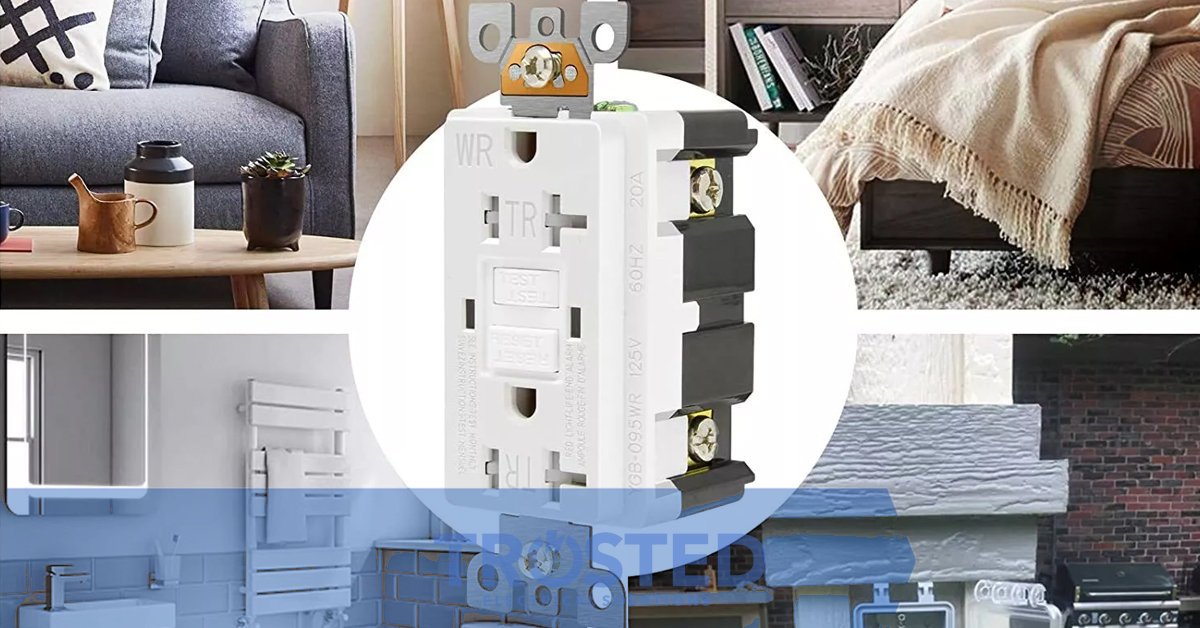
A GFCI outlet (Ground Fault Circuit Interrupter) is one of the cheapest life-safety upgrades in your home. It cuts power within milliseconds of detecting a ground fault — which is what stands between you and a serious shock in kitchens, bathrooms, garages, and outdoor spots. It's also required by electrical code in most of those locations. Whether you're a DIYer or a homeowner in Miami or nearby areas, here's the whole job broken into three phases.
PHASE 1 — Prep: tools + safety
Checklist — gather:
- GFCI outlet
- Flathead and Phillips screwdrivers
- Voltage tester or multimeter
- Wire stripper
- Electrical tape
- Needle-nose pliers
- Wire connectors (optional)
Checklist — before touching a wire:
- Find the breaker for that outlet and switch it OFF
- Confirm zero power with your voltage tester
No tester, no work — that's the rule.
PHASE 2 — Install
- Remove the cover plate, pull the old outlet from the box, and disconnect the wires — note which were line and which were load
- Identify the line wires (power coming in) with your tester; mark them with electrical tape. Wires feeding downstream outlets are the load wires
- Connect: black (hot) line wire → brass LINE screw; white (neutral) line wire → silver LINE screw; load wires → LOAD terminals; green or bare ground wire → green screw
- Fold the wires neatly back into the box without pinching them
- Secure the outlet and attach the cover plate
PHASE 3 — Test
- Flip the breaker back on
- Press TEST — the outlet should trip
- Press RESET — power should return
- If it doesn't behave: breaker back OFF, recheck your wiring starting with line vs. load
Mistakes that trip people up
- Mixing up line and load — the single most common reason a new GFCI won't work.
- Leaving bare wire exposed at the terminals.
- Overtightening screws — it damages the outlet and loosens the connection over time.
Quick Q&A
Can I install a GFCI outlet myself? Yes — with the right tools and safety precautions, most homeowners can. If you're unsure at any point, call a professional.
Where are GFCIs required? Kitchens, bathrooms, garages, basements, and outdoor areas, per the National Electrical Code (NEC).
How often should I test it? Monthly — just press the TEST button.
Rather not open up a live electrical box yourself? No shame in that — it's exactly the kind of quick job an electrician knocks out safely. Trusted Electrical Solutions handles GFCI installation in Miami or nearby areas: 786-342-9582 or www.trustedelectricalsolutions.com.
Leave a comment
Tag Group
Recent Posts




About Author


Our Trusted Electrical Solutions takes great pride in delivering the best electrical services to our customers. We strive to ensure that each customer is satisfied with their experience.
If you are looking for an electrician, we encourage you to give us a call.
We look forward to helping you with all your electrical needs.

Quick Links
Business Hours
Mon - Sunday
24 Hours
Copyright © Trusted Electrical Solutions · Admin Login