
Why Your Breaker Trips More in Miami Winter (and How to Fix It)
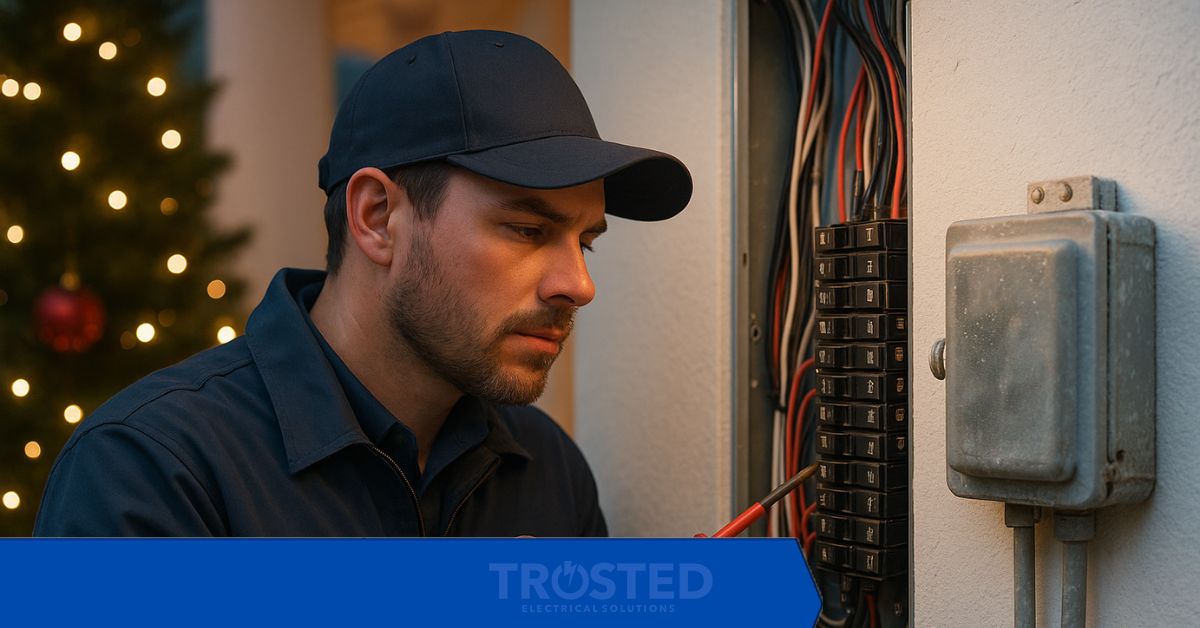
The breaker did not ruin Christmas dinner. Christmas dinner ruined the breaker — one course at a time. Here is the post-mortem.
4:00 PM — The appetizers
The pool pump is running, the outdoor inflatables are up, and the Christmas lights are on. The panel is already carrying a full winter load: pool equipment, holiday lights, and the dehumidifier fighting the damp air. Miami winters feel dry, but they still carry moisture and salt — cooler nights plus leftover humidity means condensation inside boxes, breakers, and outdoor outlets, and salt air turns that moisture into corrosion on metal parts, weakened breaker contacts, and hotspots.
5:30 PM — The main course
The oven is on, the slow cooker is going, the air fryer is crisping something, and someone starts a load of laundry. Every one of those is a heavy draw, and several are sharing one circuit. This is the moment most winter trips happen: not one appliance failing, but five of them arriving at the same circuit at the same time.
6:15 PM — The space heater
A guest feels a draft and plugs in a space heater — on the same circuit as the holiday lights. A heater is the single hungriest thing in the house. The breaker, already warm from an hour of overload, trips. The lights dim, the AC pauses, and dinner goes dark.
6:20 PM — The reset that should not have happened
Someone flips the breaker back on. It trips again. They flip it again. Here is the rule: a breaker that trips twice is not being annoying — it is warning you. The circuit is overloaded or damaged. Keep resetting it and you are heating connections that are already stressed.
What the post-mortem found
Three contributors, all preventable: load (too many heavy appliances on shared circuits), moisture and salt (corrosion in outdoor boxes — look for white or green residue, the first sign), and breaker health (a breaker that feels warm is a warning, and one that trips more than twice a week needs replacing). Older homes are more vulnerable: pre-1990s wiring insulation goes brittle, grounding may be outdated, and breakers trip easier under humidity.
The fixes, before next year's dinner
Split high-load appliances across separate circuits — never run the pool pump, holiday lights, oven, and laundry on the same circuit hour after hour. Use GFCI and AFCI protection in outdoor and older areas. Check outdoor boxes for corrosion, replace metal outdoor boxes with sealed, weather-rated plastic enclosures, and make sure exterior covers fully close. Keep pool equipment areas dry and clear. Have an electrician tighten all panel connections annually. And the cheapest single upgrade: replace old exterior metal boxes with sealed PVC weather-rated ones — that one change alone has stopped the majority of nuisance trips in home after home, because salt air is brutal on unprotected hardware.
Five-minute checklist before the guests arrive
Any rust or greenish powder near outlets or breakers? Outdoor boxes closing properly? Breakers warm to the touch? Pool pump or heater causing trips? Holiday lights all on one circuit? Lights dimming when appliances start? A yes on any of these means the system is being pushed too hard.
Call immediately — not after dinner — if you notice: a burnt smell near the panel, breakers that stay warm, sparks or crackling, lights flickering every time a major appliance starts, breakers tripping daily, or an EV charger shutting off unexpectedly. These are not local quirks. They are early danger signs.
Keep the next holiday bright and trip-free — a quick winter inspection from Trusted Electrical Solutions costs far less than a dark dining room. Call 786-342-9582 or visit www.trustedelectricalsolutions.com to book one.
---
Leave a comment
Tag Group
Recent Posts



About Author


Our Trusted Electrical Solutions takes great pride in delivering the best electrical services to our customers. We strive to ensure that each customer is satisfied with their experience.
If you are looking for an electrician, we encourage you to give us a call.
We look forward to helping you with all your electrical needs.

Quick Links
Business Hours
Mon - Sunday
24 Hours
Copyright © Trusted Electrical Solutions · Admin Login