
Blog
Top 5 Signs You Need Electrical Inspections for Safety in Miami
03 Sep, 2026
177
Info
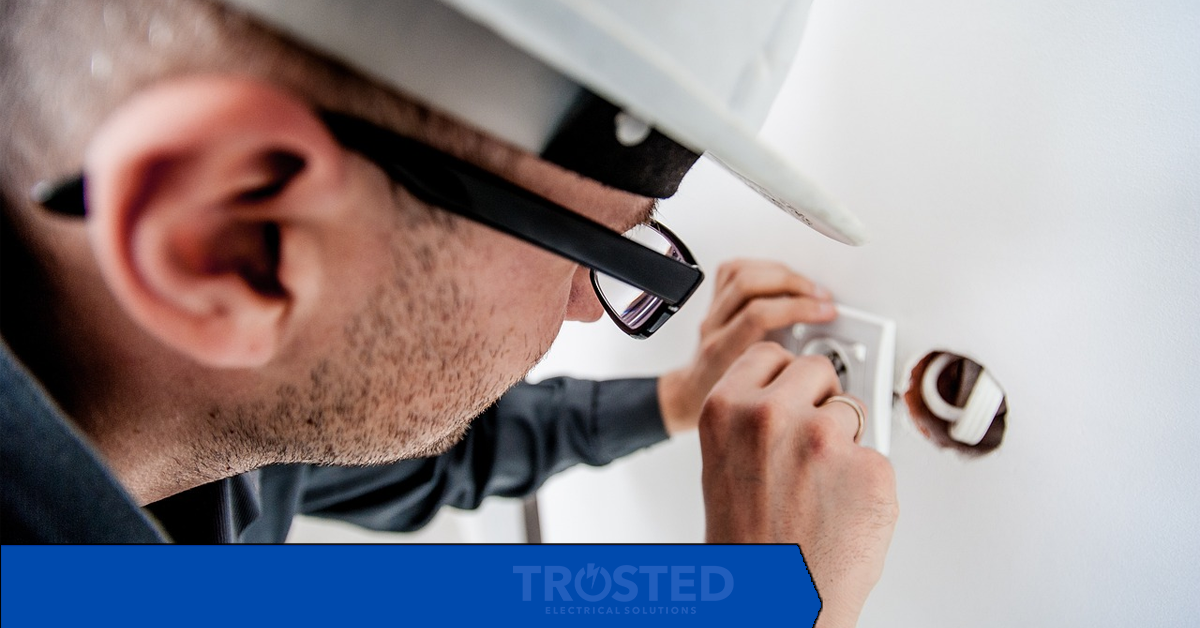
Book an electrical inspection as soon as any one of these five signs shows up: breakers that trip often, lights that flicker, a burning smell or discolored outlet, wiring older than today's code, or a power bill that jumped for no clear reason. Any one of them can mean a fault that gets worse the longer it waits. In a Miami home, humidity and salt air age wiring and connections faster than they would inland, so a small warning here deserves a fast answer.
Alarm one: breakers that trip again and again
A breaker trips to protect the circuit, and one trip after a storm is normal. A breaker that trips every week is not. It usually means the circuit is overloaded, the wiring is damaged, or the breaker itself is wearing out. Older homes are the most likely to show this, because their circuits were sized for a time when a house ran far fewer devices. If the same breaker keeps tripping, stop resetting it and get it inspected — a breaker that is reset over and over can stop protecting the circuit at all.
Alarm two: lights that flicker or dim
A light that flickers when the air conditioner starts may just be a heavy load coming on. A light that flickers on its own, or dims when nothing new is running, points to a loose connection, an overloaded circuit, or a failing breaker. Loose connections heat up behind the wall, and heat is what starts fires. This is a same-week call, not a watch-and-wait.
Alarm three: a burning smell or a discolored outlet
This is the one that means today, not this week. A burning smell near an outlet or the panel, a scorched mark, or an outlet that has turned yellow or brown means something is overheating right now. Turn off the circuit at the panel if you can do so safely, do not plug anything else into that outlet, and call an electrician immediately. Humidity makes this worse in South Florida, because moisture speeds corrosion on connections that are already loose.
Alarm four: wiring that predates today's code
If the house still has aluminum wiring or wiring from before the 1980s, an inspection is overdue even if nothing has gone wrong yet. Older wiring was not built for the loads a modern household puts on it — computers, smart appliances, chargers, a home office — and it may not meet the Florida Building Code with Miami-Dade County amendments. An inspection tells you whether the wiring is safe as it is, needs targeted repairs, or should be replaced.
Alarm five: a bill that jumped without explanation
A sudden rise in the power bill with no change in how the house is used can mean a device or a circuit is wasting energy — a failing appliance, a damaged wire leaking current, or a circuit running hotter than it should. It is the quietest of the five signs and the easiest to ignore, but it is still a fault telling you where it is. An inspection finds the drain before it becomes a hazard.
Quick FAQ
How often should a home get an electrical inspection?
Every three to five years for most homes, and sooner after a major renovation, a lightning strike, or any of the five signs above. Older homes and homes with aluminum wiring should be checked more often.
What does an inspection actually cover?
The panel, breakers, wiring, outlets, grounding, and smoke detector circuits, plus a check that permitted work matches what is in the walls. You get a written list of what is safe, what needs attention, and what can wait.
Is an inspection the same as a permit inspection?
No. A permit inspection checks permitted work against the code. A safety inspection is a checkup on the whole system, and it is the one that catches problems before they become emergencies.
Call Trusted Electrical Solutions at 786-342-9582 or visit www.trustedelectricalsolutions.com to schedule a free inspection and quote.
---
 Jose Luis Rey
Light Fixtures for Safety: What Miami Homeowners Should Know
02 Sep, 2026
193
Info
Good lighting is a safety device, not decoration. It keeps you from tripping on the steps, it shows who is at the door, and a well-lit house is a house a burglar skips. The front-door test is the fastest way to judge it: come home after dark, stand where a visitor stands, and look at what you can and cannot see. If the path, the steps, and the door are not clearly lit, the house has work to do.
The path: can you see where you are walking?
Walk from the car or the gate to the front door in the dark. Every step, every change in level, and every edge should be visible without guessing. Path lights and step lights do this job, and they should be bright enough to see by without glaring into your eyes. If you have ever stumbled on a step you could not see, the lighting failed the test. Fixtures along a walkway should be rated for outdoor use, because humidity and salt air corrode ordinary hardware.
The door: can you see who is there?
Stand at the door and imagine someone knocking. A light beside or above the door should show the visitor's face clearly, not leave them in shadow. A motion-sensor light at the entry does two jobs at once: it welcomes the people who belong there and startles the people who do not. A doorbell camera helps, but it is no substitute for a light that actually illuminates the person standing there.
The sides and the back: what is hiding in the dark?
Walk around the sides and the back of the house after dark. Dark corners near windows, gates, and the air-conditioning unit are the spots a burglar looks for and the spots a homeowner trips over. A few well-placed lights — motion-sensor floods on the corners, a light over the back door — close those gaps. There is no need to flood the whole yard with light; the goal is to remove the hiding places, not to light up the neighborhood.
Choosing the fixture: match it to the spot
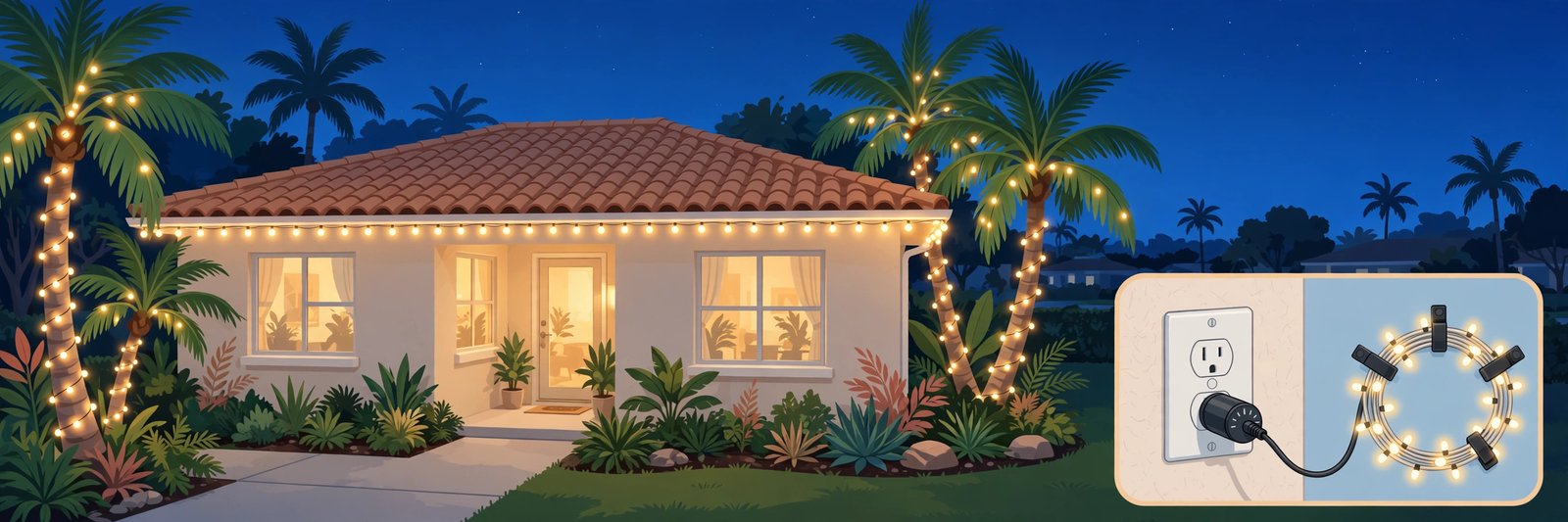
Outdoor fixtures need ratings that match where they sit. A fixture fully exposed to rain needs a wet rating; one under a covered porch needs a damp rating at minimum. In Miami's climate, weather-resistant fixtures last far longer than indoor fixtures pressed into outdoor service, and the extra cost is small next to replacing corroded fixtures every year or two. LED fixtures are a natural fit outdoors: they use little power, last for years, and give off almost no heat.
Warning signs your fixtures need attention
Flickering lights can mean a wiring problem or a failing fixture, and they should not be ignored. Rust or discoloration on an outdoor fixture means corrosion has started, and the fixture should be replaced before it fails. Inconsistent brightness between fixtures on the same circuit can mean a faulty connection. Any of these is a reason to have an electrician look, because a lighting problem is often a wiring problem wearing a fixture as a disguise.
The cost question
Quality fixtures cost more up front, and professional installation costs more than a do-it-yourself attempt. But a fixture that lasts, installed correctly and up to code, is cheaper over its life than a cheap fixture replaced twice and a repair for the wiring it damaged. Lighting that meets the Florida Building Code and Miami-Dade County amendments is also lighting that a future buyer's inspector will pass without a second look.
Quick FAQ
What kind of light fixture is best for outdoor safety?
A weather-rated LED fixture with a motion sensor, placed to light the path, the steps, and the door. Wet-rated for exposed spots, damp-rated under cover.
Do I need an electrician to install outdoor light fixtures?
Yes, unless the fixture is a direct replacement on existing wiring. New fixtures, new circuits, and outdoor wiring are licensed-electrician work and should be permitted and inspected.
Can lighting really deter break-ins?
Yes. A well-lit house is a harder target: it removes hiding places and makes an intruder visible. Lighting works best alongside locks, cameras, and a doorbell camera, not instead of them.
Call Trusted Electrical Solutions at 786-342-9582 or visit www.trustedelectricalsolutions.com to schedule a free inspection and quote.
Jose Luis Rey

Avoid These Costly Electrical Inspection Mistakes in Miami
01 Sep, 2026
221
Info
An electrical inspection is one of the cheapest ways to protect a house, and the expensive mistakes are all avoidable: skipping inspections, hiring on price alone, ignoring small problems, not knowing the local code, and forgetting that weather wears everything down. Each mistake below is paired with its small fix today and its big bill later.
Mistake one: neglecting small issues — the small fix is a visit, the big bill is a rewire
Flickering lights and a breaker that trips now and then feel easy to live with. In Miami's humidity, though, small problems grow: moisture corrodes connections, a loose connection heats up, and a warm connection damages the wire around it. The small fix is an inspection that finds the loose connection in an hour. The big bill is the section of wiring that has to be replaced once the damage spreads — or the fire the loose connection eventually starts.
Mistake two: choosing the cheapest inspector — the small fix is a licensed pro, the big bill is a failed inspection
A low price is tempting, but an inspection is only worth what the inspector knows. A licensed electrician who works under the Florida Building Code and Miami-Dade County amendments every day knows what to look for in this climate — corrosion, undersized panels, missing GFCI protection, and unpermitted work from a previous owner. An underqualified inspector misses those things, and the homeowner pays for the miss twice: once for the inspection that found nothing, and again for the repair that could have been caught early.
Mistake three: overlooking local codes — the small fix is asking, the big bill is a re-inspection
Miami's electrical rules come from the Florida Building Code with Miami-Dade County amendments, and they change over time. Work that passed years ago may not pass today, and unpermitted work from a previous owner becomes the current owner's problem at sale time. The small fix is asking the inspector which code version applies and what the house needs to meet it. The big bill is a failed inspection followed by a round of corrections and a second inspection fee. Inspections follow the building code, not utility rules — the utility's role is service and interconnection, not setting inspection standards.
Mistake four: ignoring the weather — the small fix is a corrosion check, the big bill is a panel replacement
Humidity and salt air are the slow enemies of a Miami electrical system. They corrode panel components, outdoor fixtures, and connections, and the damage is invisible until something fails. The small fix is an inspection that includes a corrosion check, especially for homes near the coast. The big bill is a panel or a run of wiring replaced years before its time because nobody looked.
Mistake five: waiting until something breaks — the small fix is a schedule, the big bill is an emergency call
Waiting for a failure means paying emergency rates, living without power while parts are found, and discovering the problem at the worst possible time. The small fix is a regular inspection schedule — once a year is a good rhythm for most homes, more often for older ones. The big bill is the emergency visit, the rush parts, and the damage the failure caused while nobody was watching.
How to make the inspection count
Clear the area around the panel and the outlets before the inspector arrives. Write down every symptom you have noticed — flickers, trips, smells, warm outlets — and hand the list over. Ask questions about what is found and what it will take to fix it. Then follow up on the recommendations promptly; an inspection report that sits in a drawer protects nothing.
Quick FAQ
How often should I have my home's electrical system inspected?
Once a year is a good rhythm for most homes. Older homes, homes near the coast, and homes with a history of electrical problems benefit from more frequent checks.
What does an electrical inspection cover?
The panel, the wiring, the outlets and switches, grounding, and compliance with the current code. The inspector also checks for corrosion and signs of overheating.
Will an inspection find unpermitted work from a previous owner?
Often, yes. An inspector can spot work that does not match the permit record or the code, and that finding is better discovered now than at sale time.
Call Trusted Electrical Solutions at 786-342-9582 or visit www.trustedelectricalsolutions.com to schedule a free inspection and quote.
---
Jose Luis Rey
Essential Guide to Replacing Circuit Breakers in Miami
31 Aug, 2026
220
Info
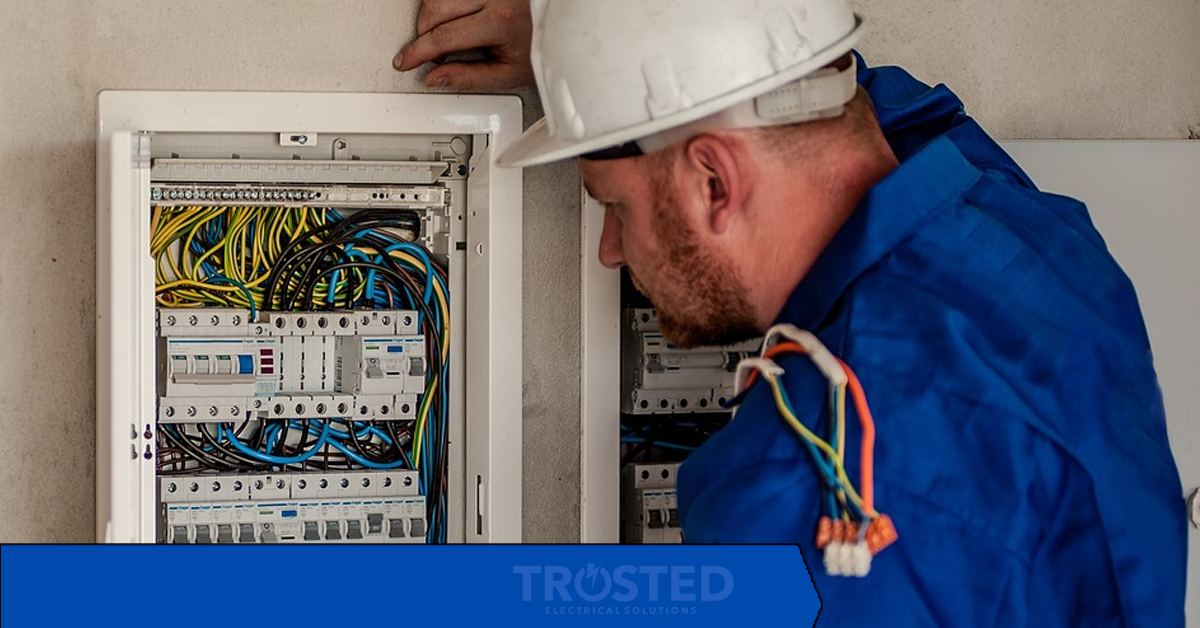
Replace a circuit breaker when it trips often, smells hot, shows rust or physical damage, or the panel is decades old — and replace it with the right type, not just any breaker that fits. A standard breaker guards against overloads, a GFCI guards against shocks in wet areas, and an AFCI guards against arc faults that start fires. Knowing which job each breaker does is the whole guide, and breaker replacement is licensed-electrician work, permitted and inspected.
Job one: the standard breaker guards the circuit
The standard breaker is the workhorse. It trips when a circuit draws more current than it can safely carry, which protects the wiring from overheating. Most general circuits in a Miami home run on 15- or 20-amp breakers, and the replacement must match the circuit it protects — a bigger breaker on a small wire is not an upgrade, it is a fire risk. If a standard breaker trips now and then under a heavy load, that is it doing its job. If it trips every day, the breaker may be failing, or the circuit may be overloaded, and an electrician should find out which.
Job two: the GFCI guards people in wet areas
A GFCI breaker — or a GFCI outlet — watches for current leaking where it should not go, and trips in a fraction of a second. That is what protects a person in a kitchen, a bathroom, a laundry room, or outdoors, where water and electricity meet. In Miami's humidity, moisture finds its way into outdoor outlets and older bathroom wiring faster than it would in a dry climate, which is why GFCI protection matters here and why it is required in wet locations under the code. If a GFCI trips and will not reset, do not force it — have it checked.
Job three: the AFCI guards against arc faults
An AFCI breaker watches for the tiny, dangerous arcs that happen when wiring is damaged or a connection loosens — the kind of fault that can start a fire inside a wall without ever tripping a standard breaker. AFCIs are required for bedroom circuits in new work under the code, and they are a smart addition anywhere wiring is old. A house with aging wiring and no arc-fault protection is missing a layer of defense it can no longer afford to skip.
Signs the breaker itself needs replacing
Frequent tripping with no new load on the circuit, a burning smell near the panel, visible rust or heat discoloration, a breaker that feels loose or will not stay on, and a panel more than 25 years old are all signs to act on. Humidity and salt air corrode panel components over time, so a breaker that worked fine for years can fail without warning. Annual inspections catch that wear before it becomes a failure.
What the replacement involves
The electrician shuts off the panel, removes the failed breaker, fits a replacement of the correct type and amperage, and tests the circuit. The work follows the Florida Building Code and Miami-Dade County amendments, and it is permitted and inspected. The utility's role is service rules, not the code that governs the panel. Homeowners should not replace breakers themselves — the panel is live work, and a small mistake there has serious consequences.
Quick FAQ
Can I replace a circuit breaker myself?
No. Breaker work happens inside a live electrical panel and should be done by a licensed electrician. The risk of shock or fire is too high for a do-it-yourself job.
How do I know which type of breaker I need?
It depends on the circuit: standard breakers for general circuits, GFCI protection for kitchens, bathrooms, laundry, and outdoors, and AFCI protection for bedrooms. An electrician matches the breaker to the circuit and the code.
How long do circuit breakers last?
Decades, in most cases — but heat, humidity, and salt air shorten that life. If your breakers are old and the panel has never been inspected, have them checked.
Call Trusted Electrical Solutions at 786-342-9582 or visit www.trustedelectricalsolutions.com to schedule a free inspection and quote.
---
Jose Luis Rey

The Miami Electrician's Guide to Smart Home Automation
27 Aug, 2026
267
Info
A good smart home is not a pile of gadgets — it is a morning that runs itself. The thermostat cools the house before the alarm, the lights come up with the sun, the door locks behind you, and nothing needs a second thought. Start with the thermostat and the lighting, keep everything on one platform, and leave any new wiring to a licensed electrician. That is the whole guide, and the morning below shows how it works.
6:00 a.m.: the house wakes up first
The thermostat eased the house down overnight and brings it back to a comfortable temperature before anyone is awake. In a Miami home, cooling runs most of the year, so a thermostat that learns the household schedule is the single device that pays for itself fastest. It also watches humidity, which matters as much as temperature here — a house at 74 degrees with high humidity still feels sticky. Before buying, check that the wiring at the wall supports the model you want; some thermostats need a common wire, and older homes may not have one.
6:30 a.m.: the lights come up on their own
The bedroom and kitchen lights rise on a schedule instead of a switch, and the hallway lights turn themselves off when nobody is in them. Smart bulbs and switches are the easiest devices to start with, and they are also the ones that teach the household the habit: set the schedule once, then stop thinking about it. Outdoor lights on a sensor or a schedule mean the front of the house is never dark when someone comes home late.
7:30 a.m.: the house locks up behind you
The smart doorbell shows who is at the door, the door lock secures itself after you leave, and the cameras watch the driveway and the gate. These devices only work well if the network reaches them — Miami homes are often built with concrete block, which weakens Wi-Fi signals from room to room, so a device at the far end of the house may need a stronger signal or a wired connection. A doorbell that keeps rebooting is usually a power problem, not a Wi-Fi problem: the old transformer may be too weak for the new device.
9:00 a.m.: the house looks after itself
With everyone out, the house settles into its daytime routine. Leak sensors under the sinks and behind the washing machine watch for water and send a phone alert at the first sign of trouble — a leak caught in an hour costs a towel, and a leak caught in a week costs a floor. The thermostat eases off while the house is empty. Nothing here is exotic. It is a set of small devices, each doing one job, all on the same platform so they answer to one app instead of five.
Three rules that keep it working
First, pick one platform and check every device against it before buying, so nothing ends up stranded on a different app. Second, plan the Wi-Fi coverage before the devices, especially in a concrete-block house where signals fade through walls. Third, remember that new circuits, outdoor wiring, and panel work follow the Florida Building Code and Miami-Dade County amendments, and they belong to a licensed electrician — the utility's role is service rules and interconnection, not writing the code.
Quick FAQ
What smart home device should I buy first?
A smart thermostat. In a Miami home it saves the most, fastest, because cooling runs most of the year. Lighting comes second.
Can I install smart home devices myself?
Plug-in devices and battery sensors, yes. Anything that touches house wiring — new switches, a doorbell transformer, outdoor cameras — is safer in a licensed electrician's hands.
Will automation work during a power outage?
No. Smart devices need power and, for most of them, Wi-Fi. Battery sensors keep sensing locally, but remote alerts and app control stop until power and internet return.
Call Trusted Electrical Solutions at 786-342-9582 or visit www.trustedelectricalsolutions.com to schedule a free inspection and quote.
---
Jose Luis Rey
Tag Group
Recent Posts



About Author

Our Trusted Electrical Solutions takes great pride in delivering the best electrical services to our customers. We strive to ensure that each customer is satisfied with their experience.
If you are looking for an electrician, we encourage you to give us a call.
We look forward to helping you with all your electrical needs.

Quick Links
Business Hours
Mon - Sunday
24 Hours
Copyright © Trusted Electrical Solutions · Admin Login
Request a service