
Blog

Common Electrical Hazards in Older Homes
14 Mar, 2025
567
Info
Older homes have character — and electrical systems designed for a world with one TV and no air conditioning. Which hazards you're living with depends a lot on when your house was wired. Here's the tour by era.
THE 1940s–60s HOUSE: knob-and-tube and two-prong everything
Some homes from this era still carry knob-and-tube wiring: no grounding conductor, cloth insulation, and a design that predates modern safety by decades. It increases the risk of electrical shock and it was never meant to be buried under attic insulation. Same era, same problem: two-prong outlets with no ground path — if your plugs don't have a third prong, your outlets don't have a ground either.
THE 1960s–70s HOUSE: the aluminum years
When copper got expensive, builders switched to aluminum branch wiring. The problem: aluminum expands and contracts with temperature swings far more than copper, so connections work themselves loose over the years — and a loose connection is a heat source, and a heat source is a fire risk. If your 60s- or 70s-era home still has its original aluminum wiring, it needs evaluation by a licensed electrician.
THE PRE-2000 HOUSE: the recalled-panel generation
Federal Pacific (FPE) and Zinsco panels — both subject to major safety failures — are still sitting in countless homes from this era. These breakers are known for failing to trip, which removes the one protection standing between an overload and a fire. An outdated panel doesn't just underperform; it actively fails to protect.
EVERY OLD HOUSE: the timeless four
Overloaded circuits. Your home was wired for a fraction of today's load — HVAC, multiple electronics, modern appliances. Frequent breaker trips and overheating are the system telling you it's outgrown its design.
Worn-out outlets and switches. Sparking, discoloration, plugs that fall out — all signs of internal wear and wiring problems that raise fire risk.
Missing GFCIs. Modern code requires ground-fault protection in kitchens, bathrooms, and outdoor areas. Many older homes never got them, leaving shock risk anywhere water meets electricity.
Too few outlets, too many cords. Fewer outlets per room means extension cords and power strips doing permanent duty — and permanent extension-cord use causes overheating. Adding outlets in key areas is one of the highest-value safety upgrades there is.
AND IN FLORIDA SPECIFICALLY: surge exposure
Frequent storms and lightning make power surges a constant threat, and older homes rarely have adequate surge protection. A whole-house surge protector at the panel guards every appliance and device behind it.
If your home predates modern electrical code — or you simply don't know what's behind the walls — a safety inspection answers the question in an afternoon. Trusted Electrical Solutions specializes in inspections, panel upgrades, rewiring, and GFCI installation for older homes across the Miami area: call 786-342-9582 or visit www.trustedelectricalsolutions.com to schedule yours.
 Jose Luis Rey

How Much Does It Cost to Install an EV Charger at Home in Miami?
08 Mar, 2025
748
Info
Thinking about a home EV charger? Here's what the invoice actually looks like — line by line — so the quote you get makes sense before you sign it.
LINE 1 — The charger unit: $300–$1,200
This is the hardware on your wall. A Level 1 charger runs on a standard 120V outlet — it usually comes with the car, charges slowly, and costs almost nothing to set up. A Level 2 charger runs on 240V, charges many times faster, and is what most homeowners actually install. (DC fast chargers are commercial-grade, very expensive, and essentially never installed in homes.)
LINE 2 — Electrical panel upgrade (if needed): $500–$2,500
A Level 2 charger is a hungry appliance. If your panel doesn't have the spare capacity, it needs an upgrade first — and this is the line item that surprises people most. A licensed electrician can tell you in one visit whether your panel is ready.
LINE 3 — Wiring and permits: $200–$1,500
Running the circuit from your panel to the charger — plus the permit, which Miami-Dade requires. The price swings with distance: a charger mounted right next to the panel is cheap to wire; one across the garage (or the house) means more wire, more conduit, more labor.
LINE 4 — Labor: $300–$1,200
Professional installation by a licensed electrician. This is not a DIY job — 240V work done wrong is a fire waiting to happen, and permitted work protects your insurance and resale.
THE TOTAL: $1,000–$4,500
That's for a typical Level 2 home installation, depending on which of the lines above apply to you.
LINE 5 — Incentives (the line that subtracts): up to −50%
Check before you pay full price. Utility companies including Florida Power & Light and various government programs offer rebates and tax incentives for home charger installations — some covering up to half the cost.
Is it worth it?
If you own an EV and plan to keep it, yes: charging at home beats public stations on both time and cost per mile, and an installed charger is a genuine resale plus. For a professional installation done to code the first time, Trusted Electrical Solutions specializes in EV charger installations across the Miami area: call 786-342-9582 or visit www.trustedelectricalsolutions.com to schedule a consultation.
Jose Luis Rey
The Dangers of Overloaded Circuits: Essential Safety Tips for Homes & Businesses
06 Mar, 2025
588
Info
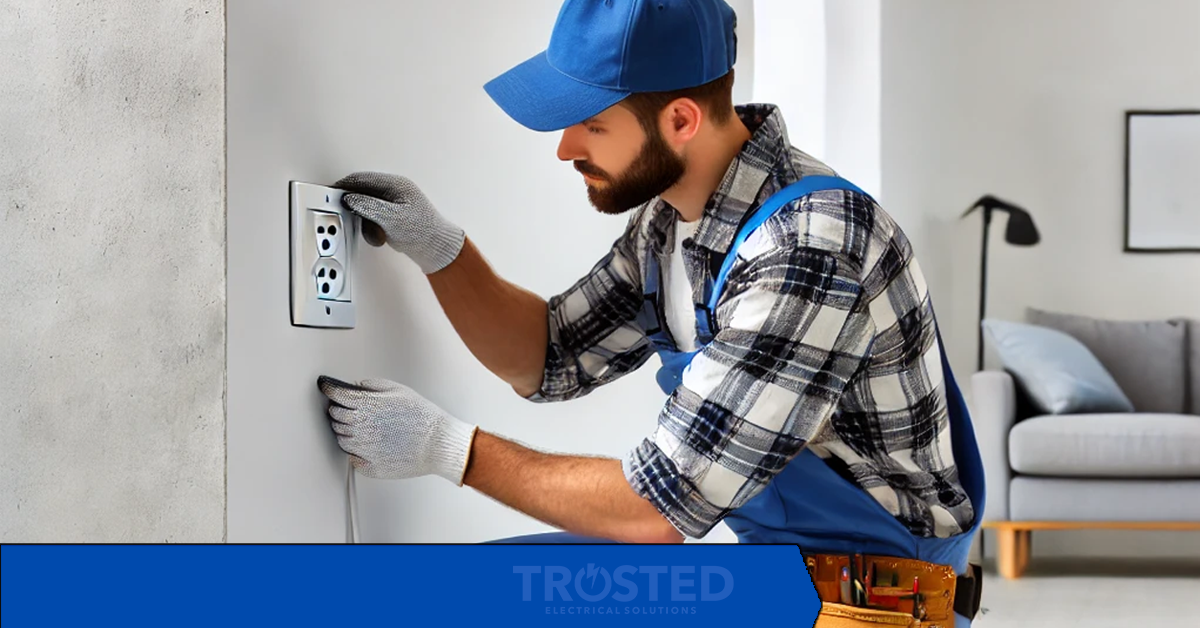
An overloaded circuit is simply a circuit carrying more electrical demand than it was designed for — usually because too many high-power devices share it. In homes the usual suspects are space heaters, microwaves, and hairdryers; in businesses it's heavy equipment, computers, and HVAC systems. Around this simple fact, a lot of dangerous folklore has grown. Let's clear it up.
MYTH 1: "The breaker tripping all the time is just annoying."
The breaker tripping IS the safety system working. A breaker that keeps shutting off is telling you the circuit is already past its limit. The real danger is the breaker that doesn't trip — that's when wires overheat silently.
MYTH 2: "Flickering lights when the AC kicks on are normal."
Dimming or flickering when a big appliance starts means the circuit is straining under excessive demand. Occasional and slight can be benign; frequent or pronounced means the wiring is undersized for the load — and overloaded wiring is a fire risk, not a quirk.
MYTH 3: "A warm outlet or a faint burning smell will go away on its own."
It won't. Warm outlets, burning odors, and buzzing or sparking are signs of overheating wiring — the stage right before an electrical fire. If you notice any of these, stop using that outlet and call a licensed electrician. This is the one myth that burns houses down.
MYTH 4: "Power strips and extension cords add capacity."
They don't — they just add more places to plug things into the same overloaded circuit. If your setup depends on daisy-chained strips and cords, you don't have enough circuits; you have a distribution problem wearing a disguise.
MYTH 5: "Overloads just mean the power goes out for a bit."
Sometimes. But overloaded circuits also destroy sensitive electronics, HVAC systems, and commercial machinery — and for businesses, a serious overload can halt operations entirely, creating liability on top of the repair bill. And always in the background: overheated wires ignite. Electrical fires from overloads are fast and devastating.
What actually prevents overloads
Upgrade the panel if your home or business has outgrown it — modern capacity for modern loads.
Give high-power equipment dedicated circuits: HVAC systems, refrigerators, industrial machinery.
Get a licensed electrician to inspect the wiring and confirm it meets current safety standards.
Spread high-wattage devices across multiple circuits instead of stacking them on one.
Switch to energy-efficient appliances where you can — less draw, less strain.
If your breakers are tripping, your lights are dimming, or your outlets feel warm, don't wait for the myth to become the fire. Trusted Electrical Solutions handles residential and commercial overload diagnosis, panel upgrades, and dedicated circuits across the Miami area: call 786-342-9582 or visit www.trustedelectricalsolutions.com to schedule an inspection.
Jose Luis Rey

How to Childproof Your Electrical Outlets
02 Mar, 2025
470
Info
Electrical outlets sit exactly at a small child's eye level, and they're irresistible. According to the National Fire Protection Association (NFPA), hundreds of children suffer electrical shocks and burns every year from tampering with unprotected outlets. The good news: the right protection for your child's age makes the danger nearly disappear.
Stage 1: The crawler (under ~18 months) — block everything
At this age the defense is purely physical: the baby can't understand rules, so the outlets simply must not be accessible.
Tamper-resistant receptacles (TRRs): the permanent fix. Spring-loaded shutters inside the outlet block anything that isn't a proper plug, they meet National Electrical Code requirements, and they're maintenance-free once installed. This is the single best childproofing upgrade you can make.
Outlet covers as a stopgap: plastic plug caps are cheap but determined toddlers pry them out; sliding covers close automatically when you unplug; box covers enclose the whole outlet — best for outlets that stay in constant use.
Power strip covers: entertainment centers and home offices are strip jungles — enclose them so little hands can't reach the sockets.
Stage 2: The curious toddler — secure the surroundings
Toddlers pull, chew, and climb. Outlets are only half the battle now.
Manage every cord: run cord concealers along walls and under furniture, tape down loose cords so they can't be yanked (or tripped over), and use cord shorteners to take up slack.
Keep appliances back from edges and water: hairdryers, straighteners, and chargers belong away from sinks and tubs — and if an appliance ever lands in water, don't reach in; unplug it or kill the breaker first if you can do so safely.
Stage 3: The school-age kid — teach the why
Childproofing hardware still matters, but now the brain is ready. Simple, repeated explanations about why outlets and cords are never toys stick at this age — consistent reminders beat one big lecture.
When to call a professional
For the permanent solutions — TRR installation, secure wiring, whole-room child-safety upgrades — a licensed electrician gets it done right the first time. Trusted Electrical Solutions installs tamper-resistant outlets and child-safety electrical upgrades for families across the Miami area: call 786-342-9582 or visit www.trustedelectricalsolutions.com to keep your home safe as your kids grow.
Jose Luis Rey

How to Pick the Right Electrician in Miami
28 Feb, 2025
682
Info
Hiring an electrician is a job interview, and you're the hiring manager. Whether the work is residential, commercial, or industrial, run every candidate through these ten questions — and listen for the answers that separate the pros from the problems.
1. "Are you licensed and insured?"Green flag: "Yes — here's my license number, and you can verify it with the licensing board." Red flag: hesitation, or "we work under someone else's license."
2. "What do you specialize in?"Green flag: specific experience that matches your job — residential wiring, commercial installations, industrial repairs. Red flag: "we do a bit of everything" with no depth in your category.
3. "What certifications and training do you hold?"Green flag: ongoing training and credentials from recognized bodies like the National Electrical Contractors Association (NECA) or the Electrical Training Alliance — proof they keep up with current standards. Red flag: a license from twenty years ago and nothing since.
4. "Can I see reviews or talk to past clients?"Green flag: verifiable reviews and references they'll happily hand over. When researching online, give extra weight to organic search results over sponsored ads — credibility earns rankings, while anyone can buy an ad (and ad spend often shows up in your invoice). Red flag: no reviews anywhere, or reviews they won't let you verify.
5. "Can I get this in writing — and can I compare it?"Green flag: a detailed written quote, no pressure about shopping around. Get at least three quotes. Red flag: a bid dramatically lower than everyone else's — it usually means cut corners, cheap materials, or costs that appear later.
6. "Walk me through how you'll communicate during the job."Green flag: prompt, courteous, answers your questions in plain language — scope, timeline, and costs spelled out before work starts. Red flag: vague timelines and one-word answers before you've even hired them.
7. "Will the work meet code?"Green flag: "We follow the National Electrical Code and all local building regulations — and we pull permits where required." Red flag: suggesting the job "doesn't really need a permit."
8. "Do you warranty your work?"Green flag: a clear written warranty on workmanship. It signals they trust their own work — and it protects you if something fails later. Red flag: "if there's a problem, call me" with nothing in writing.
9. "How fast can you get here in an emergency?"Green flag: a straight answer about emergency availability and response time. Red flag: no after-hours number at all.
10. "How long have you been working around here?"Green flag: an established local business that knows the local codes and inspection process — and has a local reputation to protect. Red flag: a truck with out-of-area plates and no local references.
Take your time with this decision. The cheapest or fastest option is rarely the one you want inside your walls — the right electrician is licensed, experienced, communicative, and accountable. For homeowners and businesses in Miami and surrounding areas, Trusted Electrical Solutions checks every one of these boxes: extensive residential and commercial experience, licensed and insured, with free written estimates. Call 786-342-9582 or visit www.trustedelectricalsolutions.com to learn more.
Jose Luis Rey
Tag Group
Recent Posts


About Author

Our Trusted Electrical Solutions takes great pride in delivering the best electrical services to our customers. We strive to ensure that each customer is satisfied with their experience.
If you are looking for an electrician, we encourage you to give us a call.
We look forward to helping you with all your electrical needs.

Quick Links
Business Hours
Mon - Sunday
24 Hours
Copyright © Trusted Electrical Solutions · Admin Login
Request a service