
Blog
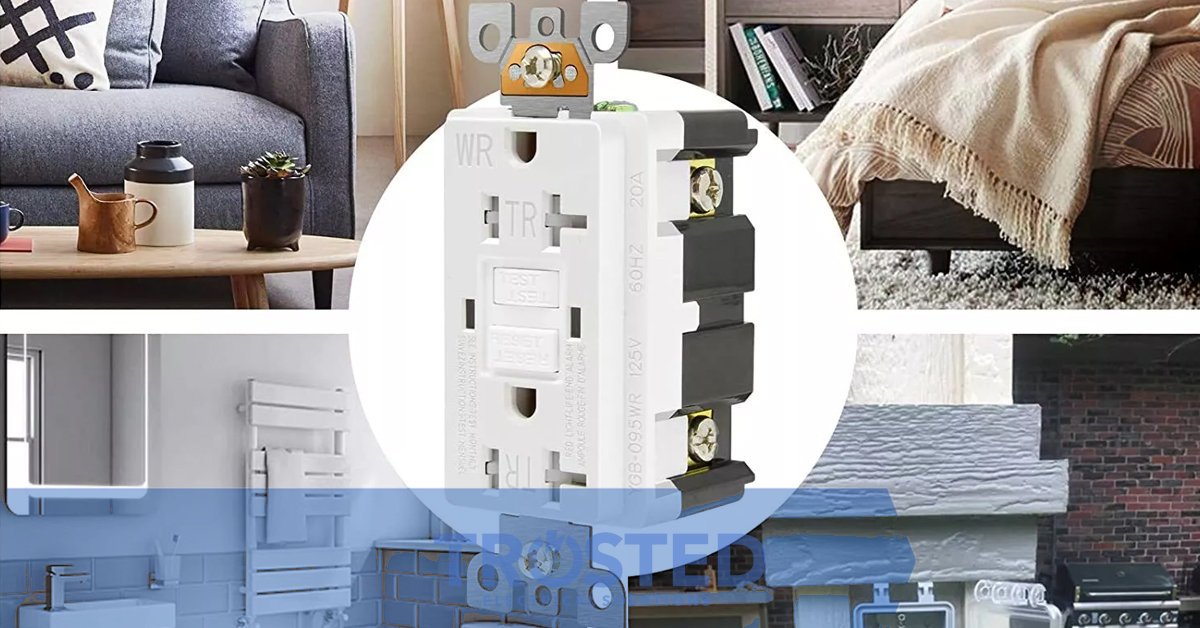
How to Install a GFCI Outlet: Step-by-Step DIY Guide for Safe Wiring
27 Jan, 2025
550
Info
A GFCI outlet (Ground Fault Circuit Interrupter) is one of the cheapest life-safety upgrades in your home. It cuts power within milliseconds of detecting a ground fault — which is what stands between you and a serious shock in kitchens, bathrooms, garages, and outdoor spots. It's also required by electrical code in most of those locations. Whether you're a DIYer or a homeowner in Miami or nearby areas, here's the whole job broken into three phases.
PHASE 1 — Prep: tools + safety
Checklist — gather:
GFCI outlet
Flathead and Phillips screwdrivers
Voltage tester or multimeter
Wire stripper
Electrical tape
Needle-nose pliers
Wire connectors (optional)
Checklist — before touching a wire:
Find the breaker for that outlet and switch it OFF
Confirm zero power with your voltage tester
No tester, no work — that's the rule.
PHASE 2 — Install
Remove the cover plate, pull the old outlet from the box, and disconnect the wires — note which were line and which were load
Identify the line wires (power coming in) with your tester; mark them with electrical tape. Wires feeding downstream outlets are the load wires
Connect: black (hot) line wire → brass LINE screw; white (neutral) line wire → silver LINE screw; load wires → LOAD terminals; green or bare ground wire → green screw
Fold the wires neatly back into the box without pinching them
Secure the outlet and attach the cover plate
PHASE 3 — Test
Flip the breaker back on
Press TEST — the outlet should trip
Press RESET — power should return
If it doesn't behave: breaker back OFF, recheck your wiring starting with line vs. load
Mistakes that trip people up
Mixing up line and load — the single most common reason a new GFCI won't work.
Leaving bare wire exposed at the terminals.
Overtightening screws — it damages the outlet and loosens the connection over time.
Quick Q&A
Can I install a GFCI outlet myself? Yes — with the right tools and safety precautions, most homeowners can. If you're unsure at any point, call a professional.
Where are GFCIs required? Kitchens, bathrooms, garages, basements, and outdoor areas, per the National Electrical Code (NEC).
How often should I test it? Monthly — just press the TEST button.
Rather not open up a live electrical box yourself? No shame in that — it's exactly the kind of quick job an electrician knocks out safely. Trusted Electrical Solutions handles GFCI installation in Miami or nearby areas: 786-342-9582 or www.trustedelectricalsolutions.com.
 Jose Luis Rey

The Future of EV Charging: Powering the Road Ahead
23 Jan, 2025
564
Info
Electric vehicles are no longer a niche market — they're a mainstream choice for drivers and businesses alike. But charging has changed enormously to get here, and it's about to change again. Here's where it's been, where it stands, and where it's headed in your local area.
THEN: charging was an overnight affair
Not long ago, "EV charging" meant one thing: plugging into a standard 120-volt outlet in your garage and waiting. Level 1 charging — 2 to 5 miles of range per hour — worked if you drove little and slept a lot. Public infrastructure was thin, and any long trip took real planning.
NOW: a real menu of options
Today there are three tiers, each built for a different life:
Level 1 (120V): still the slow-and-steady overnight option for light drivers.
Level 2 (240V): 10 to 60 miles of range per hour, installed at homes, workplaces, and public stations — the sweet spot for most EV owners.
DC fast charging: direct current, 60 to 200 miles of range in 20–30 minutes, lined up along highways and urban hubs for long-distance travel.
And the case for plugging in keeps getting stronger. Charge while you sleep, shop, or work instead of standing at a pump. Pay less per mile than gasoline, especially on off-peak home rates. Cut your driving emissions. And in many areas, collect rebates and incentives from governments and utilities for installing a charger.
Thinking about a home charger? The only question that matters first is whether your electrical panel can handle it — a quick assessment by a licensed electrician answers it. Trusted Electrical Solutions does exactly that: 786-342-9582 or www.trustedelectricalsolutions.com.
NEXT: charging disappears into the background
The innovations arriving now point to a future where you barely think about charging at all. Wireless pads that charge your car just for parking over them. Ultra-fast chargers that cut sessions to minutes. Smart chargers that talk to your home energy system and pick the cheapest, greenest time to charge. And bidirectional charging — your EV sending power back to the grid during peak demand, turning the car into a backup battery for your house.
Local businesses are part of this arc too. Chargers in parking lots attract EV-driving customers, give employees a genuine perk, and put a company's environmental commitments where people can actually see them.
Getting in now
If you're installing at home, the path is straightforward: pick the charger level that matches your driving, get a licensed electrician to assess your panel, sort out local permits and available incentives, and have it professionally installed so it's safe and code-compliant.
The electric shift isn't coming — in Miami and surrounding areas, it's already parked in the driveway. The only question is whether your charging setup is ready for what's next.
Jose Luis Rey
What to Do in an Electrical Emergency: Homeowner & Business Owner Guide
20 Jan, 2025
573
Info
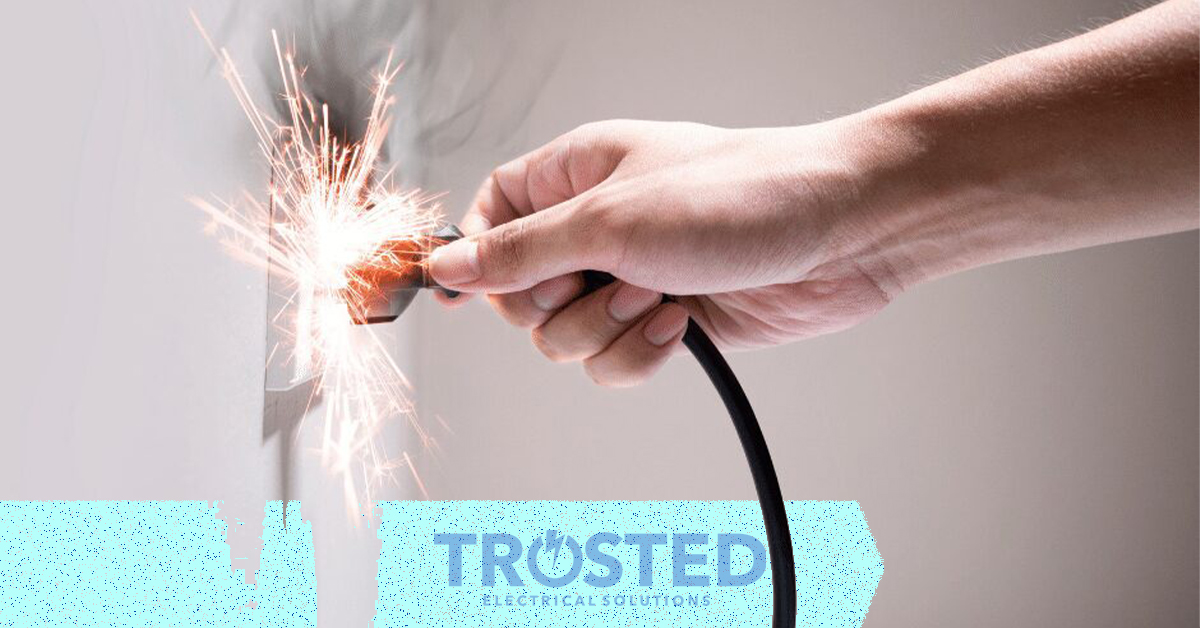
Electrical emergencies don’t wait for business hours. When something goes wrong, you don’t need a manual — you need the right move, right now. Find your scenario:⚡ POWER OUTAGEDo this right now: Check whether it’s just you or the whole block — glance outside or ask a neighbor. If it’s only your home, check the main breaker before assuming the worst. Keep the fridge closed, use battery-powered lights instead of candles, and unplug sensitive electronics so a surge doesn’t greet them when the power comes back.⚡ SPARKING OUTLET OR APPLIANCEDo this right now: Unplug the device immediately — but only if you can do it without touching anything damaged or wet. If the sparking continues or you see scorch marks, leave it alone and kill the circuit at the breaker panel.⚡ BURNING SMELL OR SMOKEDo this right now: Treat it as a fire until proven otherwise. If there’s an actual electrical fire, call 911 — and never use water on it; grab a Class C fire extinguisher. Get everyone, pets included, away from the area.⚡ DOWNED POWER LINEDo this right now: Stay at least 30 feet back — a live line can energize the ground around it. Call your utility company or emergency services. Never touch the line, a vehicle touching it, or anything in contact with it.⚡ TRIPPED BREAKERDo this right now: Unplug whatever was running on that circuit, then reset the breaker once. If it trips again immediately, that’s the circuit telling you something is wrong — an overload or a short — and it needs a professional, not a third reset attempt.Cutting the power safelyFor most of these, killing power at the source stops things getting worse. Your main panel is usually in the garage, basement, or utility room — flip the main switch or the affected breaker to Off. One hard rule: never touch the panel if it’s wet or there’s standing water near it.Be ready before it happensKeep a Class C fire extinguisher somewhere accessible. Put surge protectors on your electronics. Stash battery-powered flashlights where you can grab them in the dark. And handle the unglamorous prevention: schedule regular electrical inspections, replace old or damaged wiring and outlets, don’t use extension cords as permanent wiring, and keep your smoke detectors working.Trusted Electrical Solutions runs 24/7 emergency service across Miami and surrounding areas — licensed electricians for residential and commercial systems, with fast response times. When it’s more than a tripped breaker — suspected wiring or panel damage — call 786-342-9582 or visit www.trustedelectricalsolutions.com.
Jose Luis Rey
10 Essential Electrical Safety Tips for Your Home
15 Jan, 2025
532
Info
The safest way to think about electrical safety isn’t memorizing rules — it’s walking through your own house with fresh eyes. Here’s what to check, room by room.KitchenThis is where water and electricity share the most counter space, so it gets the strictest rules. Outlets near the sink should be GFCI outlets — they cut power within milliseconds of detecting a ground fault, which is what keeps a shock from becoming a tragedy. Keep small appliances back from the sink edge. And give your outlets breathing room: cramming the toaster, coffee maker, and microwave into a single outlet invites overheating and fire. Spread the load across outlets, and use power strips with surge protectors where it makes sense.BathroomSame story, smaller room. GFCIs are a must here, and hairdryers, straighteners, and chargers should live away from the tub and sink — water conducts electricity brutally well. If an appliance ever lands in water, don’t reach in; unplug it first (or kill the breaker) if you can do so safely.Living room & bedroomsMatch every bulb to its fixture’s wattage — a hotter bulb than the fixture is rated for can overheat it. Run a hand along your cords now and then: fraying, cracking, or warmth means replace, don’t tape. Never run cords under rugs or furniture, where damage hides and heat builds. With kids in the house, outlet covers or tamper-resistant outlets are non-negotiable — little fingers explore. And learn the warning signs that mean “call someone”: flickering lights, burning smells, breakers that trip over and over, outlets that feel warm.OutdoorsExterior outlets need GFCI protection too, and outdoor cords take a beating from sun and rain — inspect them before each season of heavy use and replace anything cracked or brittle.Whole-home habits that tie it togetherUnplug what you’re not using. It cuts standby draw and takes high-energy devices like space heaters and irons out of the surge equation. If your home is older or you’ve had repeat electrical issues, schedule an inspection by a licensed electrician so the whole system gets checked against current safety standards. And be honest about DIY: swapping a bulb is fine; opening a panel or rewiring a circuit belongs to a licensed electrician. Electricity doesn’t give second chances.If this walkthrough turned up anything worrying — a warm outlet, a breaker with a mind of its own — don’t sit on it. Trusted Electrical Solutions performs full home electrical safety inspections: call 786-342-9582 or visit www.trustedelectricalsolutions.com.
Jose Luis Rey

Why Are Your Lights Flickering? Common Causes and Solutions
14 Jan, 2025
512
Info
Flickering lights are your electrical system’s way of waving a red flag — and what the lights do tells you a lot about what’s wrong. Run through this quick diagnosis flow and match your symptom:Only one bulb flickers → it’s usually the bulb or the fixture.A bulb that isn’t screwed in tight will flicker on and off. Tighten it. If it keeps flickering, inspect the fixture itself for damage.Lights flicker when you flip a switch → suspect the switch.A worn-out or defective switch doesn’t make clean contact, so the power stutters. If the flicker follows one particular switch, that switch needs to be tested and replaced.Lights dim or flicker when the AC kicks on → voltage fluctuation.Big appliances pull hard when they start, and the voltage dip shows up in your lights. This one deserves a professional look — an electrician can test your home’s electrical load and determine whether an upgrade is needed.Flickering in several rooms at once → think wiring, and think fast.Loose or damaged wiring is a common cause of flickering and a genuine fire hazard. Don’t troubleshoot this one yourself: hire a licensed electrician to inspect and repair it.The whole house flickers — or the neighbors see it too → it may be the utility.A failing transformer or a power line problem on the utility side can flicker every light you own. Contact your utility company to report it and find out whether it’s a wider issue.An older home with chronic, never-ending flicker → the panel may be done.An outdated or malfunctioning electrical panel struggles to distribute power evenly. An electrician can assess whether a panel upgrade is in order.Why not just live with it? Ignored flickering tends to graduate — higher energy costs, damaged appliances, and in the worst case, an electrical fire. Regular maintenance and timely repairs are what keep a small symptom from becoming a big one.Still seeing flicker after checking the easy stuff? That’s the point where a licensed electrician earns their keep. Trusted Electrical Solutions tracks down flickering-light causes across Miami and surrounding areas every week — call 786-342-9582 or visit www.trustedelectricalsolutions.com and we’ll find yours.
Jose Luis Rey
Tag Group
Recent Posts



About Author

Our Trusted Electrical Solutions takes great pride in delivering the best electrical services to our customers. We strive to ensure that each customer is satisfied with their experience.
If you are looking for an electrician, we encourage you to give us a call.
We look forward to helping you with all your electrical needs.

Quick Links
Business Hours
Mon - Sunday
24 Hours
Copyright © Trusted Electrical Solutions · Admin Login
Request a service